THE WAR ON GREENS!

The war on drugs greens.
This week I've really been interested in how destruction of cities is a signification of actually building up society. Its easy to point out how problematic it is to literally destroy the spaces and places in which we live, but the best fact about the matter is the truth of response to environment to make change.... For a lot of people throughout time, including in Charleston, people have taken to the streets and protested in something they felt that needed this change.
It's really how the world should work.
I wonder what kind of spaces themselves show that rebellion in a way that maybe doesn't necessarily house the action of protest with people. Then I thought how reclaiming space is and obvious example of this.
Downtown Charleston in particular is an interesting example.
There is some green-space at the moment, but the need for more has been shown in recent decades by all types of design. Biophilic is the word-candy some architects love to feed their clients. What I am getting at is this sense of need... and by the people... to desire nature and spaces filled with it. National Parks have seen unbelievable traffic in recent years, and I think its a direct response to the chaotic, digital information heavy society we are living in.
With the Charleston low-line, the reclamation is in rehabilitating an old rail-way to provide a space for this type of space for nature.
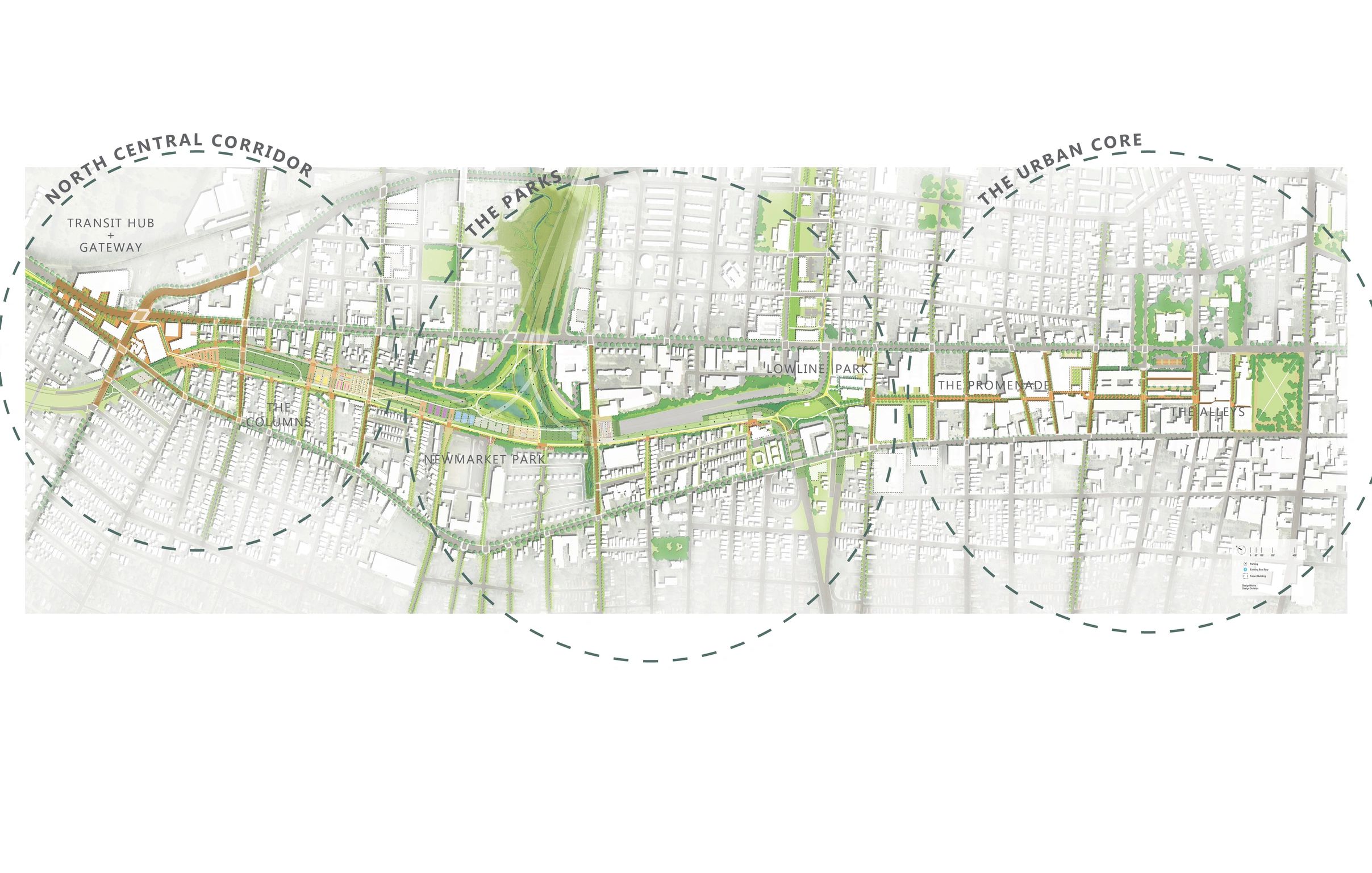
Now, this war on greens, is not similar to the type of destruction we are talking about. It's not necessarily physical. But this response of necessity to have greenspace by our society is interesting. The spaces themselves are the rebellion towards a technologically heavy realm. We want and need it, and the more we discuss it in our designs means that society is indeed changing it... even if it is a slow process.


I think this is great commentary Ian.
ReplyDeleteThe war on greens can definitely be compartmentalized to the last 100 years or so in the US. Especially in consideration of the creation of cars, roadways and post WWII industrialization. Despite this the U.S. has more state and national parks than anywhere else in the world, though these are often far removed from our cities and really a by-product of how young the U.S. really is. I think our future definitely looks the brightest if we focus on vegetating our densely occupied spaces.